Frank Lloyd Wright was one of the most famous American architects who ever lived. He spent much of his career trying to design beautiful homes that regular families could afford. Near the end of his life, he came up with a bold new idea. He wanted to create a house that people could build themselves, almost like a giant puzzle made of concrete blocks. He called this design the Usonian Automatic.
What “Usonian Automatic” Means
The word “Usonian” was Wright’s way of saying “of the United States.” He used it to describe his American-style homes. These houses were meant for middle-class families, not rich people. They were smaller and simpler than the big mansions Wright had designed earlier in his career. Most had one floor, flat roofs, and lots of windows.
The word “Automatic” had nothing to do with machines or robots. Wright used it because he thought building one of these houses would be almost automatic for the owner. Families could stack the blocks themselves, like they were building with giant toys. At least, that was the plan.
The Big Idea
In 1949, Wright took out a patent for a new way to build with concrete blocks. The blocks would lock together like puzzle pieces. Steel rods, called rebar, would slide through small grooves in the sides of the blocks. The rods went both up and down and side to side. Then workers would pour a thick liquid called grout into the spaces. When the grout dried, the whole wall became one strong piece.
The blocks came in many different shapes. Some were solid. Others had glass set inside them to let light through. Some were shaped to form windows or roof pieces. By mixing the different blocks, Wright could create walls and ceilings that looked like fancy patterns.
Wright dreamed that families could order a kit of blocks from a factory. Then they would stack them up over weekends and evenings until they had a beautiful, modern home. He believed this would help bring great design to everyday Americans.
Why the Plan Did Not Work
Sadly, Wright’s dream did not come true. Building a Usonian Automatic turned out to be much harder than he thought. The blocks were heavy. Some weighed as much as 240 pounds. Lifting and lining them up took strong workers and special skill. Most regular families simply could not do the job on their own.
The houses were also expensive. Even though Wright wanted them to be cheap, the cost of the blocks and the work of putting them together added up fast. In the end, very few of these homes were ever built. Today, only seven Usonian Automatic houses still stand in the entire country.
Wright kept trying to improve the design until his death in 1959. He liked the idea so much that he never gave up on it, even when it kept running into problems.
The Kalil House in New Hampshire
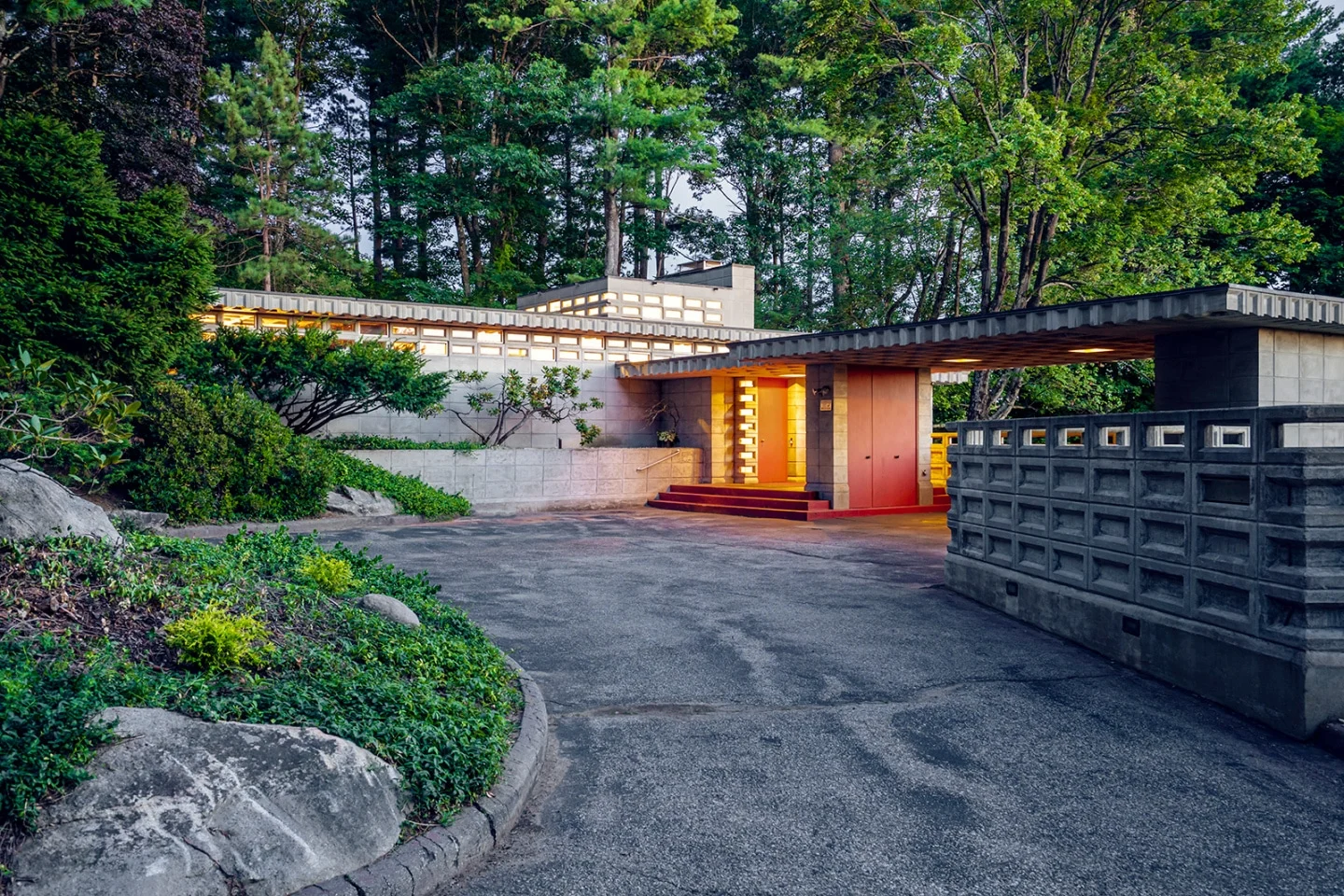
One of the best surviving examples of the Usonian Automatic is the Kalil House. It stands in a quiet neighborhood in Manchester, New Hampshire. Wright designed it in 1955 for Dr. Toufic Kalil and his wife Mildred. The house was finished in 1957.
The story of how the Kalils got their house is fun to hear. Their friends, the Zimmermans, lived just three houses down the same street. The Zimmermans had hired Wright to design a regular Usonian home for them, made of brick and wood. Dr. Kalil loved what he saw and decided he wanted his own Wright house. When the Kalils saw the design Wright sent them, they were shocked. It looked nothing like the Zimmerman house. It was made entirely of concrete blocks.
The cost shocked them too. The builders said the house would cost about $25,000. By the time it was done, the price had climbed all the way to $75,000. That was a huge amount of money in the 1950s.
To build the house, workers had to move blocks that weighed between 80 and 240 pounds each. The total weight of all the blocks added up to more than 150 tons. People say the home contains around 48,000 blocks in all.
A Time Capsule
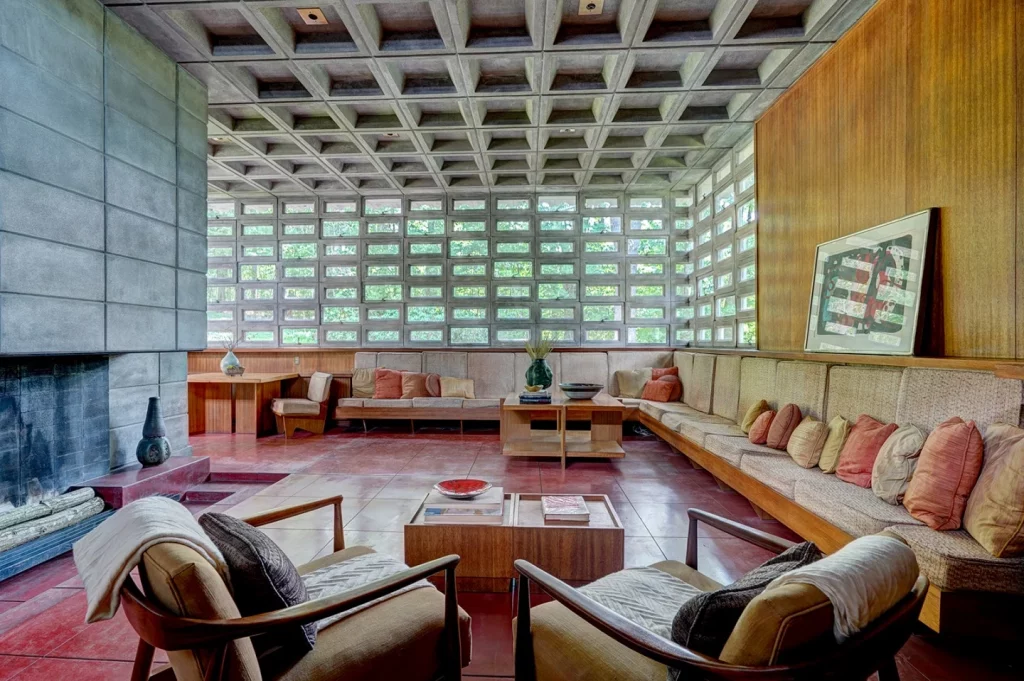
What makes the Kalil House extra special is how well it has been preserved. The Kalil family kept the house just the way Wright designed it. There have been no big changes or remodels for almost 70 years. Most of Wright’s original lamps, rugs, and even kitchen appliances are still inside.
The house has two bedrooms, two bathrooms, a kitchen, and a living room shaped like an L. Light pours in through all the glass set into the concrete blocks. There is also a small storage building next to the house. Wright had first planned that smaller building as a guest house.
In October 2025, the Kalil House was added to the National Register of Historic Places. This special list, run by the National Park Service, helps protect important buildings across America. The Currier Museum of Art in Manchester now owns the home. The museum also takes care of the Zimmerman House three doors down. Visitors can tour both houses and compare them. One shows Wright’s regular Usonian style, and the other shows his bold Usonian Automatic style. Standing in both homes on the same day is a rare treat for fans of his work.
Wright’s Lasting Vision
The Usonian Automatic never became the popular home of the future Wright had hoped for. Even so, it left a mark on American architecture. It showed that Wright was always pushing forward and trying new ideas, even in his late eighties. He cared deeply about good design and wanted everyone to enjoy it, not just the wealthy.
Today, the few Usonian Automatic homes that still stand are treasures. They teach us that great inventions do not always work out the way their creators plan. But sometimes, even a flawed idea can leave behind something beautiful that lasts for many lifetimes.
Today, the few Usonian Automatic homes that still stand are treasures. They teach us that great inventions do not always work out the way their creators plan. But sometimes, even a flawed idea can leave behind something beautiful that lasts for many lifetimes.